Panel Boards: Complete Guide to Low-Voltage Power Distribution
- Panel boards regulate and distribute power to all areas of a building, offering protection against circuit overloads and faults.
- The selection of panel boards depends on your building’s power demand. You also need to consider environmental conditions and long-term expansion plans to build a safe and efficient power system.
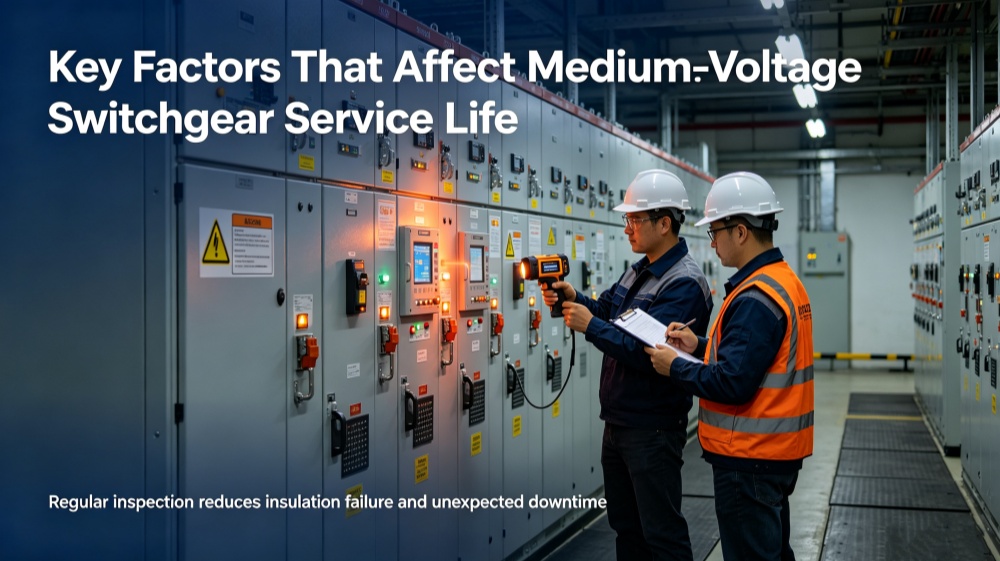
- Regular inspection and maintenance help avoid common issues such as overheating, loose wiring and frequent circuit breaker tripping, ensuring stable system operation.
- Clear circuit labeling and proper earthing greatly improve safety. They allow technicians to locate faulty circuits quickly and lower the risk of electric shock.
- Always comply with electrical codes and engage professional technicians when necessary to avoid costly accidents and safety hazards.
Overview of Panel Boards
What Is a Panel Board?
Tip: Check the labels inside the panel board to quickly identify which circuit corresponds to each power zone.
- Receive power input from the main utility supply
- Safely transmit electricity to every power point in the building
- Balance load distribution across individual circuits
- Protect against overcurrent and short circuits
- Isolate faulty equipment during malfunctions
- Monitor power quality
Working Principle
- Electricity passes through transformers to achieve safe operating voltage before entering the panel board.
- The panel board is equipped with a main circuit breaker and multiple branch breakers.
- Each branch circuit supplies power to loads such as lighting fixtures and power sockets.
- Busbars conduct electric current and connect incoming power to branch switches.
- Branch breakers mounted on busbars control power delivery to respective equipment.
Why Panel Boards Are Indispensable
Panel boards are critical for protecting personnel and equipment. Modern panel boards integrate multiple layers of safety functions.
| Safety Function | Description |
|---|---|
| Arc Flash Protection | Specialized structural design and ventilation reduce arc energy and avoid fire or explosion risks when faults occur. |
| Ground Fault Protection | Leakage protection devices minimize hazards of electric shock for operators. |
| Lockout / Tagout System | Cabinet locks and clear labels support safe power isolation during maintenance work. |
- Equipment failures may lead to fire or explosion hazards
- Non-compliance with regulations can result in fines or forced shutdowns
- Insurance providers may reject compensation claims after accidents
- Insufficient internal space increases arc flash risks
- Dust and dirt buildup causes overheating and potential fires
- Confined operating space complicates maintenance and may damage components
- Manufacturers may face legal liabilities if poor-quality panels cause personal injury
Core Components of Panel Boards
Main Circuit Breaker & Busbar
The main circuit breaker sits at the center of each panel board and works as the master switch for the whole system. It blocks excessive current and allows full power cut-off during maintenance. Busbars are installed inside the enclosure to transfer power from the main breaker to each branch circuit, balancing electrical loads continuously.
| Component | Function |
|---|---|
| Main Circuit Breaker | Acts as the main disconnect switch, prevents overcurrent and enables full power shutdown. |
| Busbar | Distributes power from the main breaker to branch circuits and balances electrical loads. |
Circuit Breakers & Fuses
Circuit breakers and fuses protect each independent circuit. Circuit breakers automatically trip to cut power when overcurrent occurs. Fuses achieve the same protection but require replacement once blown. Circuit breakers can be reset repeatedly, while fuses are disposable consumables. Both components prevent fires and protect connected equipment.
Neutral Bar & Earth Bar
Neutral bars and earth bars are essential for electrical safety. They provide a safe discharge path for fault current and reduce electric shock risks. For industrial sites with heavy loads, neutral bars and earth bars must be sized properly to withstand instantaneous extra current generated by machinery and stabilize system operation. Matching conductor specifications for different loads further enhances system safety.
Enclosure & Circuit Labeling
| Standard No. | Description |
|---|---|
| IEC 61439-1 | General rules for low-voltage switchgear and controlgear assemblies, covering construction and verification requirements. |
| IEC 60445 | Requirements for identification and marking of terminals, cable ends and conductors. |
| IEC 60529 | Defines IP ratings for protection against solid foreign objects and water ingress. |
Types of Panel Boards
Main Panel Boards & Sub-Panel Boards
Most buildings adopt a two-level distribution structure: main panel boards and sub-panel boards. The main panel board is installed near power sources such as transformers or generators, handling high-capacity incoming power for further distribution. Sub-panel boards receive power from the main panel and split power into smaller circuits for individual rooms or equipment.
| Item | Main Panel Board | Sub-Panel Board |
|---|---|---|
| Core Function | Distribute high-power loads | Split power into smaller independent circuits |
| Load Capacity | Designed for high-load applications | Suitable for low to medium loads |
| Installation Location | Close to power intake points | Near service areas |
| Circuit Features | Limited number of high-current outgoing circuits | Multiple low-current circuits |
| Protection Devices | High-rated circuit breakers | MCB, MCCB, RCBO |
| Maintenance Standard | Industrial periodic inspection | Daily facility maintenance |
Lighting Panel vs Power Distribution Panel
Lighting panels and power distribution panels serve different purposes. Lighting panels control illumination systems in offices, parking lots and similar spaces. Power distribution panels supply electricity to sockets, machinery and heavy-duty appliances.
| Feature | Lighting Panel | Power Distribution Panel |
|---|---|---|
| Circuit Breaker Rating | 15–20A (low current) | 20–30A and above (higher current) |
| Purpose | Dedicated to lighting circuits | For sockets, machinery and industrial equipment |
| Typical Application | Offices, warehouses, parking lots | Workshops, kitchens, industrial facilities |
| Extra Functions | Central lighting control, remote switching | Special circuits for high inrush current loads |
Residential, Commercial & Industrial Panels
Different building categories require panel boards with customized designs.
Residential panel boards are used in apartments, villas and small constructions, focusing on safe final power distribution, identifiable circuits and user-friendly operation.
Commercial panel boards are widely deployed in office buildings, shopping malls, schools and hotels. Design priorities include sufficient circuit quantity, load management, convenient maintenance and future expandability, rather than single current ratings.
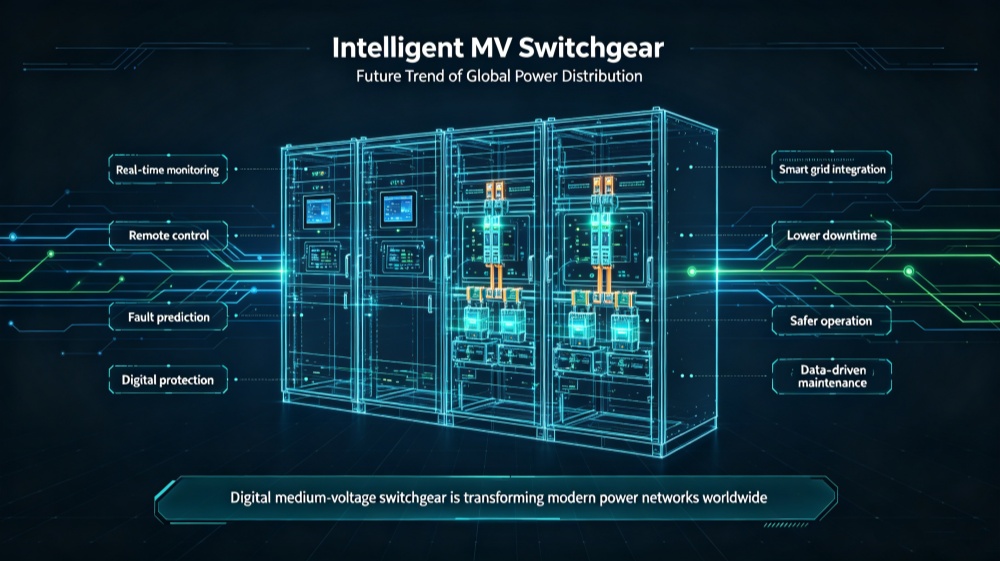
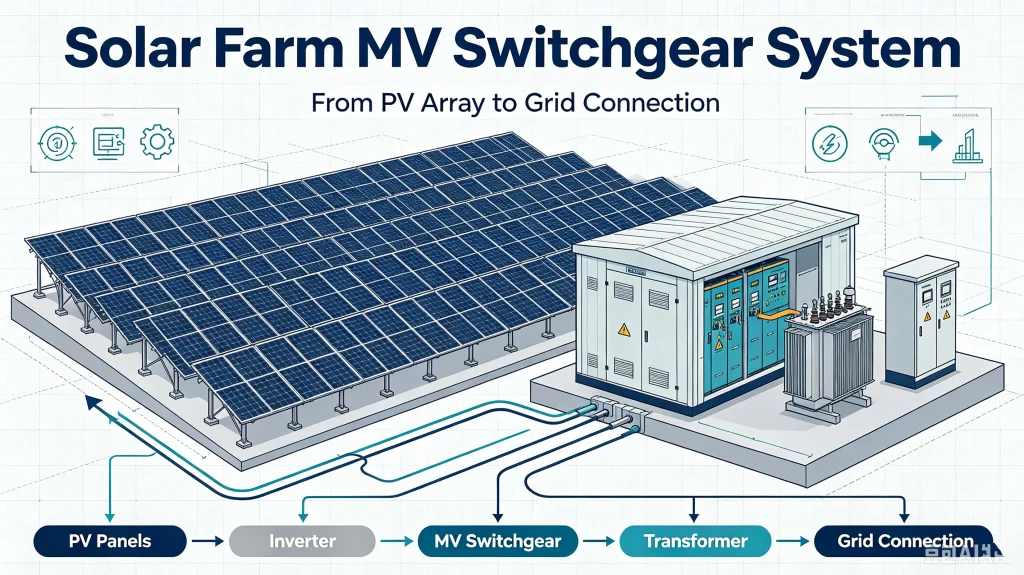
Industrial control panels are engineered for factories, utility facilities and renewable energy projects. Designers prioritize reliability, fault coordination, environmental adaptability and serviceability.
| Type | Typical Application | Basic Configuration | Core Design Focus |
|---|---|---|---|
| Residential / Small Buildings | Apartments, villas | Compact low-voltage panel boards matched to local grid standards | Safe final distribution, easy operation, clear labeling |
| Commercial / Institutional | Offices, schools, hotels, shopping malls, hospitals | Large low-voltage panels or switchgear with multiple outgoing feeders | Load management, maintenance access, expandability |
| Industrial / Infrastructure | Factories, mines, substations, renewable energy projects | Low-voltage assemblies or medium-voltage switchgear selected according to voltage, fault level and operating conditions | Reliability, protection coordination, environmental durability, serviceability |
Panel board solutions are customized according to building and equipment demands. In IEC-based overseas markets, low-voltage distribution systems commonly adopt 380V, 400V or 415V ratings. Medium-voltage equipment can be selected for 6kV, 10kV, 12kV or 24kV applications depending on project requirements.
Application Scenarios
Residential & Building Applications
Panel boards regulate power supply throughout buildings and deliver electricity to separate rooms and equipment. The main panel board is installed at the power entry point and supplies all circuits inside the building. If you have independent garages or workshops separated from the main building, sub-panel boards are required to draw power from the main supply. Large buildings adopt multi-level distribution with several sub-panels. Factories deploy industrial control centers to supply and operate production machinery.
| Equipment Type | Description |
|---|---|
| Main Panel Board | Installed at power intake, distributing power to building circuits. |
| Sub-Panel for Separate Buildings | Transmit power from the main building to garages or workshops. |
| Commercial Panel Board | Used in large buildings with expandable outgoing circuits and supporting multiple sub-panels. |
| Industrial Control Center | Factory-specific power supply and control equipment for production machinery. |
Industrial & Commercial Usage
Factories and commercial facilities rely on panel boards to handle heavy power loads and control machinery, lighting and other equipment. Commercial and industrial sites generally adopt three-phase power systems to drive large machinery. Regular inspections detect hidden hazards such as loose connections and damaged cables at an early stage.
| Component | Function |
|---|---|
| Single-Line Diagram | Helps balance power loads and satisfy electrical codes; drawings shall be updated after system modifications. |
| Circuit Breaker | Controls power supply for each circuit and ensures stable and safe system operation. |
Panel Board Selection Guide
Load & Capacity Planning
| Factor | Description |
|---|---|
| Load Analysis | Calculate power demand of all connected equipment, motors and lighting. |
| Environmental Conditions | Evaluate temperature, humidity and other factors affecting panel service life. |
| Future Expansion | Reserve space for additional breakers; allocate 30%–50% extra power capacity for future upgrades. |
| Compliance | Ensure panels comply with local electrical regulations and international safety standards. |
Environment & Installation Location
- Hot and humid regions: Improve ventilation, add anti-condensation structures and select enclosures suitable for moist environments.
- Rainy, dusty or outdoor locations: Choose cabinets with higher IP protection ratings.
- Areas with salt spray, chemical fumes or industrial pollutants: Adopt corrosion-resistant materials and surface treatments.
- Lightning-prone zones: Install surge protection devices and implement proper earthing design.
- Regions with unstable grid power: Enhance voltage tolerance, optimize protection coordination and add power monitoring functions.
Codes & Standards
| Standard No. | Description |
|---|---|
| IEC 61439-1 | General rules for low-voltage switchgear and controlgear assemblies |
| IEC 61439-2 | Requirements for power switchgear and controlgear assemblies |
| IEC 61439-3 | Requirements for panel boards operated by ordinary persons |
| IEC 60364-4-41 | Protection against electric shock |
| IEC 60364-4-43 | Overcurrent protection |
| IEC 60364-5-54 | Earthing installations and protective conductors |
| IEC 60529 | IP ratings for enclosure protection against dust and water |
| IEC 62271-200 | AC metal-enclosed switchgear for rated voltages above 1 kV up to 52 kV |
Long-Term Expansion Planning
Consider future power demands during selection. If you plan to add equipment or expand spaces, pick panel boards with vacant slots for new breakers, saving time and renovation costs later. Many specialists recommend sizing panel boards with 30%–50% surplus capacity compared to existing loads, allowing your system to grow with business expansion.