
Why Capacitor Bank Is Essential Inside Medium‑Voltage Switchgear and Substation Power Systems
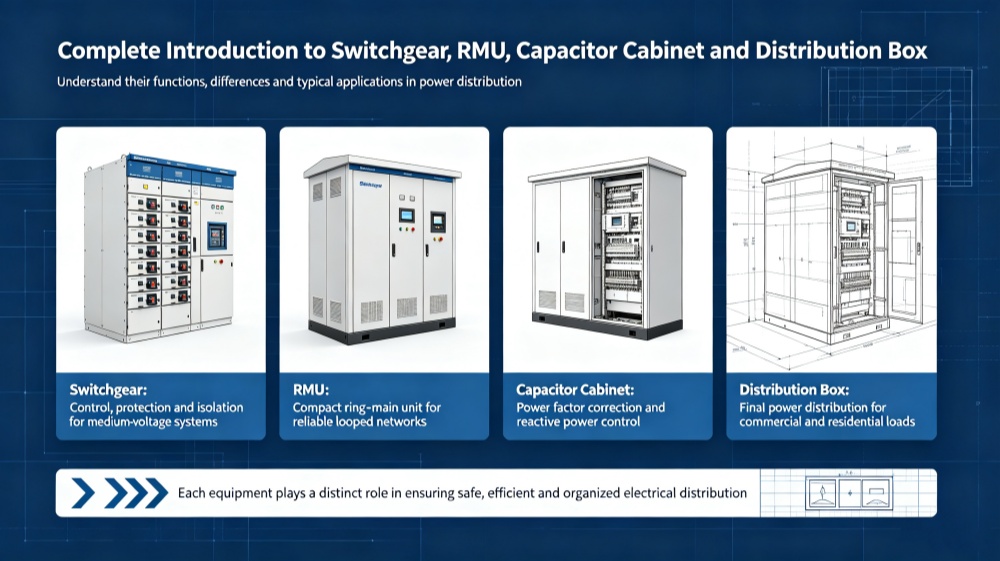
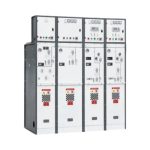
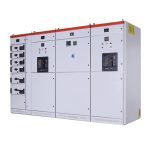
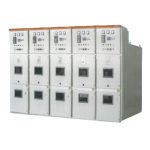
When discussing medium‑voltage power distribution infrastructure, most project buyers and electrical engineers focus heavily on medium voltage switchgear for circuit breaking, isolation and protection. However, many people overlook one critical component matched with switch cabinets: the capacitor bank and individual power capacitor units. A properly configured capacitor bank in substation facilities works alongside medium voltage switchgear to resolve common grid‑operation challenges brought by inductive‑type loads. Without well‑selected power capacitor assemblies, even high‑end medium voltage switchgear cannot deliver its full potential for energy‑saving and stable power‑supply performance.
To understand the practical value of a capacitor bank, we first need to clarify what a capacitor bank is. A capacitor bank consists of dozens or hundreds of separate power capacitor modules arranged through series‑or‑parallel connection designs. Single power capacitor units store capacitive reactive power, while the whole capacitor bank collectively outputs controllable reactive power for power‑factor adjustment. These capacitor sets are generally installed either inside dedicated compartments of medium voltage switchgear panels or as independent cabinets inside substation buildings, which explains why capacitor bank in substation is one of the most‑searched terms among global electrical contractors.
Now let’s break down the core purposes to deploy capacitor bank paired with medium voltage switchgear inside a substation system.
1.Fix low power‑factor issues by reactive‑power compensation
Transformers, industrial motors, overhead transmission lines and inductive reactors widely used across power grids are typical inductive loads. They continuously consume lagging reactive power during operation. If no power capacitor is put into service, massive useless reactive power circulates between substations and end‑user sites. The apparent power of transformers and medium voltage switchgear is occupied by reactive power instead of usable active power.
Once the capacitor bank in substation is activated, power capacitor units release leading reactive power to counteract lagging reactive power generated by inductive equipment. The capacitor bank brings power‑factor values up to 0.95 or higher, complying with international grid‑authority standards. When power‑factor stays within qualified ranges, users avoid heavy penalty charges issued by local power‑supply departments, which cuts long‑term electricity expenses for industrial factories and power‑grid operators significantly.
2.Reduce power losses and stabilize system voltage
Excessive reactive‑power flow causes obvious voltage drop along cables and inside medium voltage switchgear. Long‑distance power delivery worsens this situation greatly. When voltage levels go below the allowable range, connected equipment like motors and control instruments may run abnormally, overheat or burn out prematurely.
The capacitor bank solves this problem efficiently. When substation‑side voltage declines due to heavy loads, the capacitor bank releases reactive power dynamically to lift system voltage. When load becomes lighter and voltage rises too high, control modules inside medium voltage switchgear can switch off part of the power capacitor groups to prevent over‑voltage risks. By lowering line current, the capacitor bank also reduces heat loss on cables, transformer windings and internal components of medium voltage switchgear, minimizing equipment aging and extending the service life of your whole substation system.
3.Increase available system capacity of medium voltage switchgear and substations
Every set of medium voltage switchgear and substation transformer has fixed apparent‑power limits. When reactive‑power circulation is serious, a large share of equipment capacity gets wasted carrying non‑active power. In such conditions, you cannot connect additional production machines or new loads even if your actual active‑power demand is still low.
After you install a capacitor bank with matched power capacitor units, reactive‑power circulation inside your circuit drops sharply. Transformers and medium voltage switchgear free up spare capacity to support more active‑power loads without overloading existing devices. It means you postpone costly upgrades of medium voltage switchgear and substation expansion projects, helping infrastructure owners save huge investment costs.
4. Suppress harmonic distortion and protect medium‑voltage equipment
Modern‑day factories contain plenty of frequency converters, welding equipment and photovoltaic inverters, which produce heavy harmonics. Harmonic current flows through medium voltage switchgear and power capacitor elements, causing overheating and premature failure of single power capacitor units.
Modern‑designed capacitor bank for substation projects is often fitted with series reactors together with power capacitor modules. Combined with protection relays inside medium voltage switchgear, the capacitor bank filters out most harmonic components. It shields medium voltage switchgear, circuit breakers, current‑voltage transformers and other expensive substation devices from harmonic‑caused damage, lowering your maintenance and replacement frequency of power‑system equipment.
5.Two main connection configurations for capacitor bank inside substations
Based on different application scenarios, capacitor bank assemblies adopt two connection methods and coordinate with medium voltage switchgear accordingly.
6.Parallel‑connected capacitor bank (Most‑common type for medium‑voltage switchgear)
Parallel‑type capacitor bank is directly connected in parallel with outgoing feeders via medium voltage switchgear. Each power capacitor group links across phase‑to‑phase or phase‑to‑ground circuits. This type of capacitor bank in substation is widely used for distribution‑grid reactive‑power compensation. It offsets lagging reactive‑power from motors and transformers, improves power‑factor for 10kV‑35kV medium‑voltage distribution networks controlled by medium voltage switchgear. Each group of power capacitor can be switched on or off separately by the vacuum contactors inside medium voltage switchgear according to real‑time load variations, which achieves step‑by‑step intelligent adjustment.
7.Series‑connected capacitor bank for long‑distance transmission lines
For ultra‑long high‑voltage transmission lines, technicians connect the capacitor bank in series with power lines rather than end‑user loads. The power capacitor components reduce inherent inductive impedance of long transmission lines. It decreases voltage drop and power oscillation across long‑distance power‑delivery routes, improving overall transmission capacity. Even so, series‑type capacitor bank still relies on auxiliary medium voltage switchgear to realize fault isolation and maintenance protection.
8.Why choose well‑matched power capacitor and capacitor‑bank assemblies for your medium‑voltage switchgear?
Many buyers only pay attention to the quality of medium voltage switchgear cabinets but select low‑cost power capacitor products carelessly. Inferior power capacitor units bulge, leak oil or break down after short‑time running. A faulty capacitor bank not only fails to complete reactive‑power compensation but also brings short‑circuit faults to your whole medium voltage switchgear system, triggering unexpected substation shutdowns.
Reliable capacitor bank for substation applications uses high‑quality metal‑film‑type power capacitor elements with self‑healing properties. When minor internal breakdown appears inside a single power capacitor unit, the self‑healing design repairs faults automatically without shutting down the whole capacitor‑bank group. Meanwhile, matching control and protection units inside medium voltage switchgear continuously monitor temperature, current and voltage of each power capacitor, tripping the circuit in time once abnormal conditions are detected.
9.Final Conclusion
To sum up, capacitor bank is an indispensable part matched with medium voltage switchgear in any substation project. Individual power capacitor units make up the whole capacitor‑bank system, and the capacitor bank in substation delivers reactive‑power compensation, power‑factor correction, voltage stabilization, loss reduction and capacity expansion functions.
Whether you are building a new substation or upgrading existing medium voltage switchgear, properly rated capacitor bank and high‑quality power capacitor products should never be ignored. Investing in a well‑designed capacitor‑bank system helps grid operators and industrial‑plant owners cut electricity‑penalty costs, maximize the usage of medium‑voltage switchgear resources and ensure long‑term safe operation of the whole power‑distribution network.