
Complete Introduction to Switchgear, RMU, Capacitor Cabinet and Distribution Box
What Is Switchgear? Functions, Components and Classification
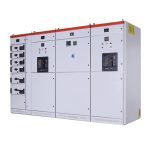
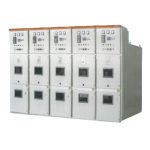
Switchgear is the core control and protection equipment in the entire power system. It is universally installed in power plants, substations, industrial production lines, and building power rooms to perform switching operation, real-time circuit control, and automatic fault protection during power transmission and distribution processes. In daily operation, switchgear can manually or remotely switch on and off power circuits according to actual load requirements, realizing flexible power distribution management. Once the power system encounters abnormal conditions such as short-circuit faults, circuit overload, leakage current, and overvoltage risks, the internal protection system of switchgear can quickly disconnect the faulty section, isolate potential safety hazards, and prevent equipment damage, circuit burnout, and large-scale power outages.
A complete set of standard switchgear consists of professional and precise electrical components, including circuit breakers, isolating switches, load switches, mechanical operating mechanisms, current and voltage transformers, and intelligent protection relays. These components work collaboratively to achieve reliable power switching, accurate data monitoring, and automatic safety protection. To adapt to different global project standards and operating environments, switchgear adopts a standardized and systematic classification method based on voltage levels, installation structures, and cabinet designs.
In terms of voltage grade, switchgear is divided into high-voltage switchgear, medium-voltage switchgear, and low-voltage switchgear. High and medium voltage switchgear are mainly used for grid power transmission, substation power distribution, and large industrial power supply, while low-voltage switchgear is applied for terminal power distribution of conventional industrial and civil projects. According to the circuit breaker installation mode, switchgear can be divided into fixed type and draw-out (removable) type. Fixed switchgear features compact structure, stable performance, and cost advantages, suitable for conventional power distribution scenarios. Draw-out switchgear supports flexible component replacement and convenient on-site maintenance, making it ideal for key projects that require uninterrupted power supply.
Based on cabinet structure design, switchgear is categorized into open-type, metal-enclosed, and metal-clad types. Metal-clad fully enclosed switchgear features excellent dustproof, waterproof, moisture-proof, and anti-corrosion performance, which can adapt to harsh working environments such as mines, chemical plants, coastal areas, and high-dust industrial zones. Due to its high safety, strong stability, and wide adaptability, switchgear has become essential equipment for power plants, urban substations, petrochemical industries, metallurgy, textile manufacturing, industrial and mining enterprises, high-rise buildings, and residential community power distribution systems.
Ring Main Unit (RMU): Working Principle and Power Supply Advantages
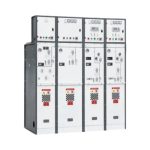
Ring Main Unit, commonly known as RMU, is a compact and highly reliable medium-voltage power distribution equipment specially designed for ring network power supply systems. Different from traditional linear single-circuit power supply modes that are prone to power outages, RMU can connect the main power lines to form a closed-loop power supply structure, realizing redundant power supply for each distribution branch.
In a standard ring network system, each power distribution branch can obtain power from both the left and right main power lines. When one side of the main line fails due to short circuit, line aging, or external damage, the ring main unit will automatically isolate the faulty line and switch the power supply path instantly. The distribution branch can continue to operate stably relying on the other normal main line. Although the overall system adopts a single power source, each terminal branch achieves equivalent dual-power supply reliability. This design effectively avoids sudden power interruption caused by single-line faults, greatly improves power supply continuity, and reduces project operation losses. Therefore, RMU is widely used in urban grid renovation, commercial complex power distribution, industrial parks, and large-scale EV charging station projects with high power reliability requirements.
Parallel Capacitor Device and Reactive Power Compensation Cabinet: Power Quality Optimization
In actual power system operation, inductive loads such as large motors, distribution transformers, and mechanical production equipment will generate a large amount of reactive power. Reactive power cannot be converted into effective work, but it occupies grid transmission capacity, increases line transmission load, and causes problems including low power factor, excessive line loss, and unqualified grid voltage. Long-term uncompensated reactive power will not only waste electric energy but also lead to unstable system operation and accelerated equipment aging.
Parallel capacitor devices are professional power compensation equipment designed to solve reactive power waste. They can effectively offset the reactive power generated by inductive loads, improve the overall power factor of the power system, stabilize grid voltage, reduce transmission line loss, and optimize power transmission efficiency. As refined terminal power optimization equipment, reactive power compensation cabinets are specially developed for low-voltage power distribution systems. In addition to basic reactive power compensation functions, they can also suppress grid harmonic interference, alleviate voltage fluctuation and flicker caused by frequent load changes, and adjust unbalanced three-phase current.
Equipping industrial and commercial power distribution systems with reactive power compensation cabinets can significantly reduce unnecessary power consumption costs, improve power utilization efficiency, stabilize power quality, and extend the service life of the entire power distribution equipment system, bringing long-term economic and safety benefits for various engineering projects.
Distribution Box: Basic Terminal Power Distribution Equipment
Distribution boxes are the most basic terminal equipment in power distribution systems, serving as the final connection between upper-level power distribution equipment and terminal power-consuming devices. Featuring high safety protection grade, compact structure, intuitive circuit display, and convenient operation, distribution boxes allow electrical operators to clearly observe circuit operating status and complete daily inspection, maintenance, and fault troubleshooting efficiently.
According to functional purposes, distribution boxes are mainly divided into power distribution boxes and lighting distribution boxes. Power distribution boxes are used for power distribution, overload protection, and short-circuit protection of industrial mechanical equipment and high-power electrical loads. Lighting distribution boxes are dedicated to power supply control and safety protection for building lighting systems, household electrical appliances, and low-power terminal equipment. Widely applied in residential communities, high-rise buildings, commercial spaces, factory workshops, and public infrastructure, distribution boxes undertake critical terminal power isolation and safety protection tasks, ensuring the safe and orderly operation of terminal power consumption.
Conclusion
Switchgear, ring main units, reactive power compensation devices, and distribution boxes together constitute a complete and hierarchical modern power distribution system, covering medium-voltage grid control, power reliability improvement, power quality optimization, and low-voltage terminal power distribution. Every type of electrical equipment has unique functional advantages and irreplaceable application value. Selecting standard, high-quality, and project-adaptive power distribution equipment is the core premise to ensure long-term safe, stable, and energy-saving operation of power systems. Ningyu Power provides full-series IEC-certified power distribution equipment and customized OEM & ODM solutions to meet the diversified power supply demands of global industrial, commercial, and new energy projects.