Introduction to Fuse Protector and Lightning Arrester for Power System Protection
Stable and safe power system operation relies on various professional circuit protection devices to avoid equipment damage, circuit failures, and safety accidents caused by abnormal current and voltage fluctuations. Among the most widely used basic protection components in industrial, commercial, and residential power distribution systems are fuse protectors and lightning arresters. These two types of electrical devices undertake different core protection tasks. Fuse protectors focus on overcurrent, overload, and short-circuit protection for daily circuit operation, while lightning arresters specialize in preventing instantaneous overvoltage damage caused by lightning strikes. This article elaborates on the working principle, core advantages, classification standards, application guidelines, and professional matching rules of fuse protectors and lightning arresters, providing standardized technical references for global power distribution engineering and equipment procurement.
What Is a Fuse Protector? Working Principle and Core Advantages
A fuse protector is a traditional, reliable, and cost-effective circuit protection device widely adopted in power systems, industrial electrical equipment, and household electrical appliances. It features a simple mechanical structure, convenient installation and replacement, stable protection performance, and extremely low manufacturing cost, making it one of the most universal protection components in the global electrical industry. The core working principle of a fuse protector relies on the thermal fusing characteristics of the internal fuse wire. When the power grid or electrical equipment suffers from short-circuit faults, long-term overload operation, or abnormal current surges, the current passing through the fuse wire will instantly exceed the rated standard value. The fuse wire generates massive heat rapidly due to current overload and self-fuses in a very short time, completely cutting off the circuit connection and isolating the faulty line from the normal power supply system.
This instantaneous breaking mechanism effectively prevents overcurrent from burning out terminal electrical equipment, avoids circuit combustion accidents, and restricts fault diffusion in the power distribution system. Different from resettable circuit breakers, fuse protectors belong to one-time protection devices. Once the internal fuse link melts and breaks the circuit, it cannot recover automatically. Electrical maintenance personnel must replace the damaged fuse protector with a new one to restore normal power supply. Although replacement is required after operation, the ultra-fast breaking speed and high fault sensitivity of fuse protectors can provide more reliable protection for precision electrical equipment compared with ordinary circuit breakers in certain special scenarios.
To ensure the scientificity and stability of hierarchical power grid protection, fuse protectors installed on different levels of power lines must follow strict coordination rules. To prevent accidental tripping, mis-fusing, and large-scale power failure accidents caused by disordered protection action, the rated current of fuse protectors installed on upper main power lines must be 1 to 2 current grades higher than those of lower branch lines. This hierarchical matching design ensures that only the faulty branch fuse melts when a local line fails, while the upper main line remains normally powered, realizing precise fault isolation and improving the overall power supply reliability of the system.
Complete Classification of Fuse Protectors
Fuse protectors have a complete and diverse classification system to adapt to different voltage levels, protection objects, installation environments, and equipment types. According to the rated working voltage, fuse protectors are divided into high-voltage fuse protectors and low-voltage fuse protectors. High-voltage fuses are mainly used for medium and high voltage power distribution equipment such as substation equipment and high-power industrial devices, while low-voltage fuses are widely used in low-voltage distribution cabinets, terminal circuits, and household electrical equipment.
According to different protection objects, fuse protectors can be professionally matched for distribution transformers, power capacitor banks, semiconductor precision components, industrial motors, and various household electrical appliances. Different equipment corresponds to fuses with different current specifications and fusing characteristics, realizing targeted overcurrent protection. In terms of structural design, fuse protectors are classified into open-type, semi-closed type, tubular type, and jet type. Open-type fuses are simple in structure and suitable for low-demand civil circuits, while tubular and jet fuses feature closed arc-extinguishing structures, which can quickly suppress electric arcs during fusing and are more suitable for industrial and high-standard power distribution scenarios.
In terms of appearance and installation shape, fuse protectors include square, cylindrical, and bolt-type structures. Diversified structural forms adapt to different installation spaces, cabinet designs, and wiring methods, meeting the personalized installation demands of various power distribution boxes, switchgears, and control cabinets. With rich classification specifications and strong scene adaptability, fuse protectors can cover almost all low-voltage and medium-voltage basic circuit protection scenarios.
Function and Application of Lightning Arresters
While fuse protectors solve overcurrent and overload faults in daily circuit operation, lightning arresters are professional safety devices specially designed for extreme overvoltage hazards caused by lightning strikes. In open-air power distribution systems, outdoor substations, solar power stations, charging stations, and high-rise building power supply systems, lightning weather will generate instantaneous ultra-high transient overvoltage on power lines. This extreme overvoltage far exceeds the withstand voltage of conventional electrical equipment, which can easily break down equipment insulation, burn out power distribution devices, and even cause lightning strike fire accidents in severe cases.
The core function of a lightning arrester is to effectively protect various power distribution equipment and terminal electrical devices from transient overvoltage damage during lightning strikes. When lightning surge voltage invades the circuit, the lightning arrester will quickly conduct and release the instantaneous surge current into the ground, rapidly suppressing the overvoltage peak and protecting the insulation performance of electrical equipment. At the same time, the lightning arrester can accurately limit the duration of follow-up current, quickly restore the circuit insulation state after the lightning surge disappears, and ensure the power system returns to normal stable operation without power supply interruption.
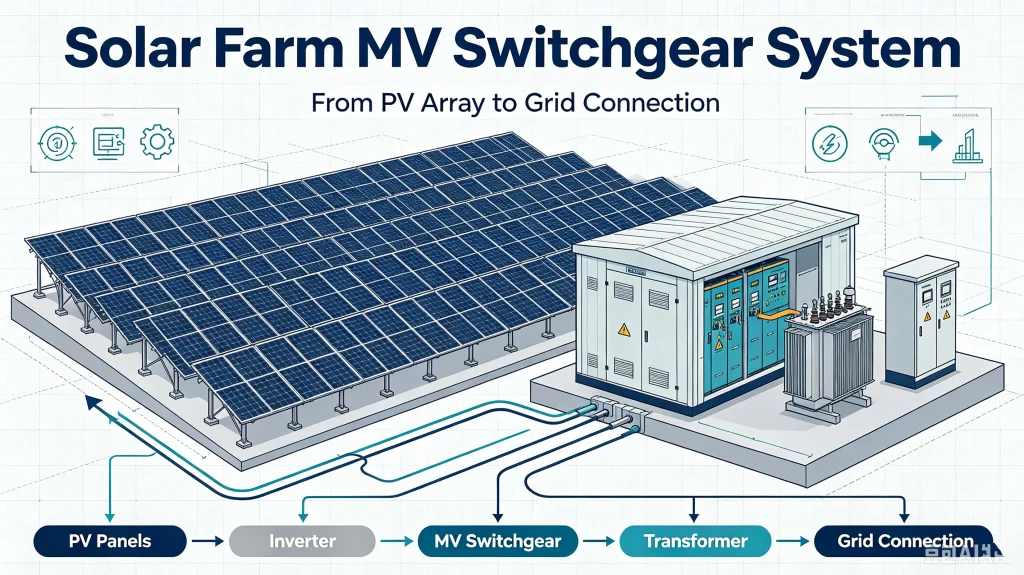
Lightning arresters are indispensable supporting equipment for outdoor power distribution projects, new energy power stations, and high-standard industrial power grids. They work cooperatively with fuse protectors, circuit breakers, and switchgear systems to build a comprehensive power system safety protection barrier, covering daily overcurrent protection and extreme lightning overvoltage protection, greatly improving the overall safety and stability of power distribution systems.
Conclusion
Fuse protectors and lightning arresters are two essential basic protection devices in modern power distribution systems. Fuse protectors rely on simple thermal fusing principles to provide fast and reliable short-circuit and overload protection for daily circuit operation, featuring low cost and wide applicability. Lightning arresters focus on solving lightning transient overvoltage risks, making up for the deficiency of conventional protection devices in extreme weather scenarios. Reasonable matching and hierarchical installation of these two types of equipment can effectively avoid most electrical faults and safety accidents, ensuring long-term stable and safe operation of power systems for industrial, commercial, residential, and new energy projects.